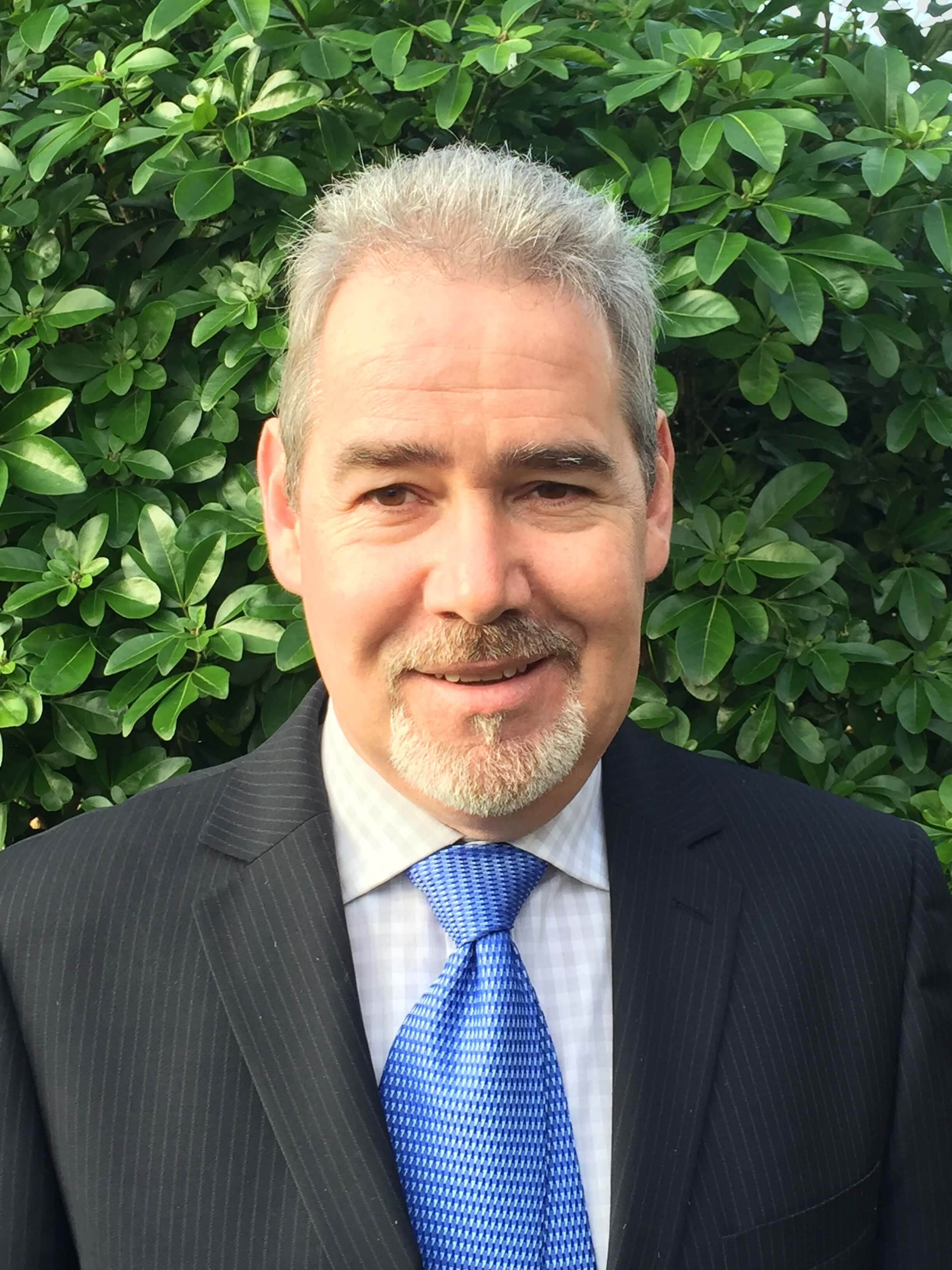
The Shipwrecked Fishermen and Mariners’ Royal Benevolent Society (Shipwrecked Mariners’ Society) has appointed Captain Justin Osmond RN as its new Chief Executive.
Read More
National maritime charity, the Shipwrecked Mariners’ Society, is marking the centenary of the introduction of the ocean convoying of merchant ships in World War One by launching a video detailing the history and impact of the convoy system.
By the beginning of May 1917, Britain had lost over a thousand merchant ships and 6,000 lives. It had only six weeks’ supply of food left and was facing the prospect of starvation as well as losses of goods and raw materials that could not be sustained and risked us losing the war.
The video, produced by the society, explores how convoying had been rejected by the Admiralty and Ship owners as late as February 1917 but dire circumstances forced a change of policy. Following the success of an experimental convoy from Gibraltar to Plymouth in early May, the first transatlantic convoy of 12 vessels left Hampton Roads, Virginia. With the protection provided by the Royal Navy and the United States Navy, only one ship failed to reach its destination.
In addition to food, raw materials, manufactured goods, oil, military equipment and munitions, more than one million American troops were transported across the Atlantic in convoy. It was found that merchant ship losses in convoy were ten per cent of those suffered by ships making independent passage, and the number of German submarines sunk increased.
During the First World War, the Shipwrecked Mariners’ Society assisted more than 50,000 merchant mariners, fishermen and their dependants, passengers and military personnel by providing clothing, food, accommodation and rail warrants, while also supplying financial assistance to widows, orphans and aged parents of lost mariners.
Now in its 178th year, the charity continues to support seafarers in need and last year provided assistance in over 2,000 cases of financial hardship at a cost of £1.4m.
Chief Executive of the Shipwrecked Mariners’ Society, Commodore Malcolm Williams, said: “The introduction of the convoy system was a late but vital decision which ensured the war was prosecuted to a successful conclusion and the country did not starve. It saved many lives too. This is something not a lot of people know about these days and we are hopeful our film will go some way to raising awareness of the sacrifice of our merchant seamen and the importance of convoying, without which the outcome of the war could have been very different.”
The decisive role and sacrifice of the men of the Mercantile Marine in World War One was recognised by King George V in conferring on them the title of the ‘Merchant Navy’, the fourth service.
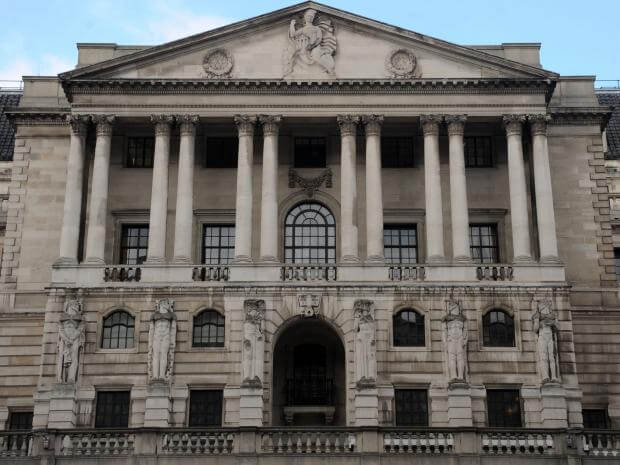
Read MoreOn this day, 28th May 1852, at the Society’s Annual General Meeting held at Willis’s Rooms, St. James’s, London, Thomson Hankey, Junr., Esq., Governor of the Bank of England, was appointed Treasurer: an office he held for 26 years until 1878.
Silver Medal awarded to Capt GB Lee of the David Malcolm for saving the crew of the ship Aphrogenia on 23 May 1857
The circumstances attending the loss of the ship Aphrogenia on 23rd May having been brought before the Committee by the Secretary whereby it appeared that Captain GB Lee of the David Malcolm then lying in the roads had gallantly gone in his boat to her assistance though the surf was breaking outside his ship and by his strenuous exertions was instrumental in saving the lives of the crew, two native boats having been swamped in the attempt to render aid.
It was resolved unanimously on the motion of Captain Lean, seconded by Captain Rawstorne, that the Silver Medal of the Society be awarded to Captain Lee for his gallant and seamanlike exertions on this occasion.
Read More
LADY SWAYTHLING TROPHY to Coxswain Gary Fairbairn for saving the lives of two people on board the yacht Ouhm on 15 May 2009.
Forth Coastguard called the Dunbar Lifeboat Operations Manager at 1706 on 15th May 2009 requesting the launch of their all weather lifeboat to provide assistance to the yacht Ouhm with 2 persons onboard in difficulties 37 nautical miles east north east of Dunbar.
A force 8 gale was blowing from the east north east; the sea state was very rough with 5 to 7 metres of swell at the launch site. Visibility was at best moderate at approximately 2 to 5 nautical miles. The crew consisted of Coxswain Gary Fairbairn; Mechanic Kenny Peters, Stuart Pirie, Kevin Keillor, Brian Cleator and John Watt.
Before the lifeboat launched Forth Coastguard informed the crew that R/T Magic, a 31 metre 995 ton tug was also proceeding to the assistance of yacht Ouhm. The yacht was reported to have suffered 2 knockdowns and was experiencing difficulty coping with the extreme weather conditions. There were two persons onboard and under bare poles they were drifting at speeds of up to 5 knots towards the lee shore on the north side of the Firth of Forth. At 1730 the Trent class lifeboat, RNLB John Neville Taylor, launched. As the lifeboat cleared the breakwaters at Torness they began to experience 7 metre seas. Speed was restricted to 15 knots for the first hour of steaming. Further offshore the swell became larger and the wind increased to a severe gale force 9. The lifeboat was hit by several breaking seas and these resulted in fendering being torn away, the bow fairlead unlatching and the salvage pump breaking free twice. Once the pump was securely lashed down again the lifeboat continued steaming towards the casualty until she fell about 10 metres from the top of a large wave. At this point vibration was felt along the starboard shaft line so Mechanic Peters went below to investigate whilst Coxswain Fairbairn held the lifeboat head to sea using the port shaft alone. Mechanic Peters reported all was well in the engine room and the lifeboat increased speed. At this point she was hit on her starboard side by a very large, breaking wave. She was laid down onto her beam ends on her port side. The port side wheelhouse windows were underwater and the braces on the whip aerial were bent through the force of the water. The lifeboat swiftly returned to the upright position allowing Coxswain Fairbairn to continue passage towards the casualty.
By 1945 the lifeboat was in the vicinity of the casualty. Yacht Ouhm was not visible owing to the sea state, however Coxswain Fairbairn and his crew were able to see R/T Magic who was keeping station upwind of Ouhm in an attempt to provide the best possible lee. Eventually the lifeboat located Ouhm, she was only visible when her masthead light shone between the waves, which were by now around 10 metres high. Ouhm was lying stern to sea with a drogue of some description deployed.
Coxswain Fairbairn made a rapid assessment of the situation and decided that the crew of two required evacuation and the yacht should be abandoned, as a tow would be impossible. After confirming that the yacht was not carrying a liferaft it became apparent that the lifeboat would have to get alongside Ouhm.
Once the plan had been decided the lifeboat contacted the skipper of the yacht and informed him of the decision to evacuate him and his wife. The lifeboat crew manned the deck in readiness for an approach to put the lifeboat alongside.
The drogue deployed by the yacht was overwhelmed by the conditions and was no longer able to hold the Ouhm stern to sea. This meant the first approach had to be made whilst the yacht was laid beam on to the sea. The resulting approach was difficult and the lifeboat was hit by a wave in the late stages, which could have caused a heavy collision that may have damaged the yacht badly or even sunk her.
Having checked his crew were still secure and well on deck, Coxswain Fairbairn applied full power astern to maintain separation between the two vessels before bringing the lifeboat around for another approach.
On the second attempt the lifeboat slowly approached the casualty heading into sea. At the last moment Coxswain Fairbairn made a tight turn to port, placing the lifeboat starboard side to alongside the casualty. The crew on deck were able to snatch the female casualty from the deck of the yacht and drag her onboard the lifeboat. At the same time a lifejacket was thrown to the remaining male casualty.
Coxswain Fairbairn used exactly the same technique to make a third approach alongside Ouhm. On this occasion the male was pulled from the deck and over the guardrails of the lifeboat. Both casualties were quickly secured in the wheelhouse and Coxswain Fairbairn having passed his thanks to R/T Magic started their passage back to Torness.
The lifeboat arrived back at Torness at 2215, a service of just under 5 hours duration in heavy weather.
Read More
The Society’s Silver Medal for Gallantry was awarded to Skipper Charles Alfred Grimmer, of the st Ben Meidie for rescuing the crew of the st Remindo on the night of 27th April, 1955.
The Society’s Silver Medal for Gallantry has been awarded to Skipper Charles Alfred Grimmer, and a pecuniary award of £5 to each member of the crew serving on the st Ben Meidie at the time, in recognition of their action in rescuing the crew of the st Remindo on the night of 27th April, 1955.
The citation was as follows:- While the Aberdeen trawler Ben Meidie SN. 340 was lying at anchor on the morning of 28th April, the watch reported to the Skipper at 0110, that he saw flares coming from a vessel lying at Kobbatangi while he was anchored to the North of the Kottatangi. He immediately called out his crew, heaving her anchor and went to the assistance of the vessel. He put the small boat out with the mate and four members of the crew. During this time the weather was blowing a very hard gale from the south-east with heavy rain. The small boat went to the assistance of the crew of the vessel in distress, which turned out to the the st Remindo of Grimsby, Off. No.149058. Skipper Grimmer then saw the lights disappearing on board the Remindo and heard shouts of help coming from the sea. He manoeuvred his vessel towards the shouts and connected with the raft, which was only 6’ by 3’. The men were all lashed to the raft but were unable to help themselves. After the men were freed and taken on the, the Ben Meidie then contacted its own small boat, which had three survivors on board. After getting everyone on board the Ben Meidie made for Thorshavn at full speed, at which port he arrived at 0530 on 28th April. If the Ben Meidie had not been there, where she was anchored, the whole of the crew of the Remindo would have been lost. One member of the crew of the Remindo was missing at the time of the rescue when the other 13 men were taken on board. Three of the 13 were found to be dead on arrival at Thorshavn, there being 10 survivors out of the crew of 14 all told.
The presentation was made to Skipper Grimmer at the Town House, Aberdeen, on 2nd June 1956, by Lord Provost Stephen, a Vice President of the Society.
Read More
Emile Robin award to Skipper John Allan Whitelam and Second Hand Stanley Jones of the trawler Yardley for the rescue of six of the crew of the Norwegian fv Arvid and five of the crew of the Norwegian fv Herdla on 11th April 1953.
The Arvid was returning from a fishing trip on 11th April 1953, when she encountered a storm off the West Coast of Norway. The gale was of exceptional force and Arvid was soon in difficulties. Rails and lifeboats were washed overboard and the vessel developed a bad leak. The Herdla, which was in the vicinity, although unable to render assistance to the stricken ship, sent out distress messages. This message was picked up at 1030 by the Yardley which was approaching Svion on her way to the Norwegian coast fishing grounds. Yardley immediately altered course to the position indicated by Herdla. No trace of the ship could be found at the position given, but eventually a wireless signal was received and a bearing obtained, and Arvis was finally located some 14 miles away. The weather was worsening and the Arvid which had received a severe buffeting was making water fast. Skipper Whitelam, manoeuvred his vessel alongside the Norwegian craft so that Yardley lay broadside to the storm in the heavy seas. The crew of Yardley, wearing lifebelts and roped to the ship for safety on account of the heavy seas being shipped, stood by to assist the six Norwegian members of the crew who jumped on to the Yardley from their sinking ship. Soon after this rescue had been carried out, at about 1600 hrs, Yardley received a further radio message from Herdla requesting assistance. Yardley immediately made all speed to Herdla’s positon, which was reached 4 hours later. The distressed vessel was shipping heavy seas and was leaking badly, but Skipper Whitelam again carried out the difficult manoeuvre of bringing his ship alongside the other vessel and in the same manner as had previously been employed, the Herdla’s crew of five were taken safely on board Yardley. Herdla sank only a quarter of an hour later. The weather was still bad and Yardley made her way to Lodingen, where she arrived on the night of 13th April.
Read More
The Emile Robin award to Captain H Murrell and Chief Officer TF Gates of the ss Missouri of London for the rescue of the crew and passengers of the Danish emigrant ss Danmark of Copenhagen on 4 April 1887.
The Danmark, a Danish emigrant vessel belonging to the Thingvalla Line, left Copenhagen for New York with 665 passengers and Captain and crew of 69 on board. On 4th April, when about 800 miles from Newfoundland, she broke her shaft, which thereupon whirled aimlessly round and round, and tore a terrible hole in the ship’s bottom, causing such serious leakage that the Captain perceived there was no chance of keeping her afloat. It was blowing hard and a heavy sea running at the time, so that it was extremely doubtful, even if the boats had been lowered, whether they could live in such a sea, and in any case they could not have carried all the persons on board. It was decided, therefore, to wait for the chance of succour, though the vessel was evidently settling down.
The poor creatures on board spent 24 hours of agonising suspense. They prayed, they sang hymns, they whispered together in groups, they scanned the horizon for the sight of a sail which might rescue them from the death which seemed almost inevitable. Their prayers were answered; on the afternoon of 5th April the British steamer Missouri, Captain Hamilton Murrell, of the Atlantic Transport Line, bound from London to Philadelphia, seeing a vessel flying distress signals, bore down upon her. Captain Murrell agreed to tow the Danmark, but said he could take no passengers. A tow-rope was attached, but for some hours they made very slow progress against head wind and sea. Captain Murrell then determined to give up the hope of reaching the American coast, and (the Captain of the Danmark consenting) squared away for the Azores. Before long, however, it was found that the Danmark was rapidly sinking, and accordingly it was resolved to abandon her, on 6th April.
Captain Murrell lowered his own boats, and, with the seven boats of the Danmark, brought the whole of the 735 persons from the disabled vessel on board of his own ship, without a single accident, although there was a heavy swell at the time. He threw overboard some bundles of rags and bales of wool in order to afford accommodation for the multitude who had unexpectedly invaded his vessel, and brought them all safely to the Azores. Thence the Missouri started back on her interrupted voyage to Philadelphia, taking about half the Danmark’s passengers with her. Captain Murrell has been most warmly received both in America and England on account of his gallant and sailor-like exploit. It is characteristic of the man that in his letter to his owners he does not seem to perceive that he had done anything particularly deserving notice, but tells the story of the rescue in a bluff, straightforward way, and only waxes enthusiastic when praising ‘the capital manner which all my officers and crew worked; I really never saw a more willing and hard-working lot in my life’. At Philadelphia Captain Murrell and his crew were accorded an extraordinary reception.
The Captain stayed three days in the City of Homes, and, besides being awarded a gold medal from the Humane Society there, was entertained at a banquet given by the Sons of Saint George, and presented with a magnificent gold watch, having a diamond star mounted on the front of the case. In Baltimore five more days were spent, and among other presentations made was a gold medal from the Masonic Grand Lodge of Maryland. On 24th May, after arrival of the vessel at the Tilbury Docks, the Egyptian Hall of the Mansion House, London, was crowded on the occasion of the presentation, by the Lord Mayor, of public testimonials from England and America to Captain Murrell, the officers and crew of the Missouri, for their heroic conduct in effecting the rescue. The Captain and his Chief Officer, Mr Thomas F Gates, have likewise been noted by the Shipwrecked Mariners’ Society for the special ‘Emile Robin Life Saving Rewards,’ at the Society’s disposal for annual award to the Captain and Chief Officer of a British vessel saving from imminent peril those on board another vessel at sea.
Read More
EMILE ROBIN award to Captain John Wiltshire and Chief Officer Frederick Stone of the ss Mohawk of London for the rescue of the crew of the schooner Alton S Marshall of Gloucester, Massachusetts on the 28 March 1894.
We cleared from London, March 22 for New York. On March 28 at 3 am., in Lat. 46 14′ N., Long. 48 28′ W., flare up lights as signals of distress were observed burning from a vessel on the starboard bow. I at once altered the course and bore down to her. As the night was very dark, with a strong wind, and a heavy sea running, we steamed slowly round her until daybreak, occasionally showing a blue light. A boat was then got out and manned by Mr Stone, Chief Officer, Boatswain Clarke, Boatswain’s Mate Uden, and Quartermaster Henchard, with men from the distressed vessel, whose boat just then got alongside.
She proved to be the dismasted schooner Alton S Marshall, of and from Gloucester, Mass., USA., bound for Iceland. With the assistance of the schooner’s boat, we succeeded in the course of five hours in saving the entire crew of 20 men, and then set fire to the schooner, as an obstruction to navigation. It was a fortunate thing for the crew of the Alton S Marshall that we sighted them when we did, as in less than 12 hours after the rescue we encountered a heavy north-easterly gale.
Read More
EMILE ROBIN award to Capt PA Moffoot and Chief Officer Owen Medwyn Jones of the ss Empire Plover for the rescue of 11 of the crew of the mv Famagusta on the 19 Mar 1948
On 19th March 1948, the Empire Plover, having previously received a request by wireless to stand by from the Famagusta, sighted her, and was requested to escort towards Curnna; the wind was westerly, reaching gale force in squalls, with high thundering seas.
At 12.45 Famagusta signalled requesting tow to nearest port; Empire Plover succeeded in passing line by rocket, but Famagusta’s crew did not take it in and line parted. Plover then manoeuvred for passing another line, but on rounding starboard quarter of Famagusta it was seen that a boat which had been launched had overturned and Plover manoeuvred for rescue purposes, though with difficulty, with Plover being a turbine vessel with little stern power.
The vessel commenced taking on board persons from water, 3 men from Plover stripped and entered water to assist those in distress. It was then seen that other persons were in the water adrift on rafts and Carley floats. Plover launched lifeboat, and at 16.30 after circling slowly searching, manoeuvred into position to take onboard rescued people and boat crew. Captain of Famagusta came on board and stated that he had abandoned his vessel as sinking, and that no other persons remained on board. Checks showed that Plover had taken 6 persons from water, 5 brought onboard from lifeboat and 5 missing. Plover continued circling and searching till dark and then made all speed for Falmouth, leaving Famagusta bows under and sinking, listing heavily to port. Survivors landed Falmouth morning of 21st March.
Thomas Raymond Kelly (deceased), Able Seaman of the ss Empire Plover was awarded the George Cross on the 10th February 1948, for the part he played in rescuing two survivors of the Famagusta and attempting a third rescue.
Read More